
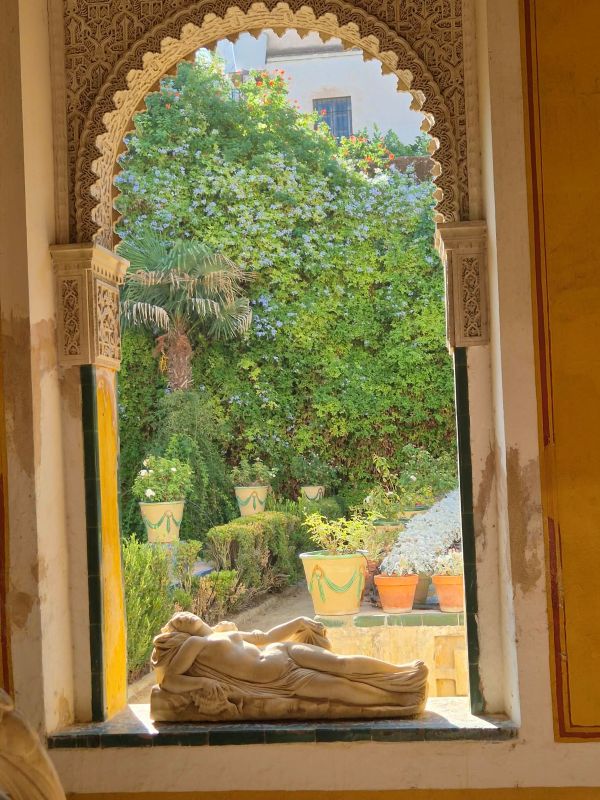
Outside of visiting the historic Alcazar of Seville, there are a few private homes that stand out and Casa Pilatos Sevilla in the heart of the old town really stands out. An amalgam of Islamic, Christian and Italian Renaissance styles, the home and gardens truly impress with the private collections of a noble family of Seville. I heard and saw pictures briefly of Casa Pilatos online and knew that I had to see it in person and that it really was not on the radar or most visitors to the city so booking a reservation on the day of visiting was relatively fast and flexible.
The visit is mostly a self-tour with an audio guide that takes you through the more significant parts of the lower floor rooms, the upper floor rooms are more restricted and guided tours that were already booked when I visited. Touring the main parts of the home was more than adequate with a lot of artwork and design influences to enjoy and experience.
A visit to the historic home at Casa Pilatos Sevilla
A brief history to Casa Pilatos in Sevilla
Casa de Pilatos is one of Seville’s most distinctive historic palaces, with its origins dating to the late 15th century. The palace developed from the union of the Enríquez and Ribera families, two important noble lineages in Seville. During the 16th century, the building underwent major expansion and transformation as its owners developed close connections with Italy and brought Renaissance artistic ideas back to Seville.
The palace became an important example of the blending of different architectural traditions. Its design combines Gothic-Mudéjar elements with Renaissance architecture, creating a distinctive mixture that reflects Seville’s multicultural history. Courtyards, decorative tiles, carved marble, classical sculptures, and ornate architectural details demonstrate the influence of both Andalusian traditions and the Italian Renaissance.
Casa de Pilatos continued to evolve over the centuries, and further changes were made during the 19th century in keeping with Romantic tastes. These additions helped create the picturesque appearance visitors see today, where Mudéjar, Renaissance, Baroque, and Romantic features exist together. The palace eventually became associated with the Dukes of Medinaceli, and it remains connected with the Medinaceli foundation today. (Andalucia)
Rooms and gardens of Casa de Pilatos, Sevilla
- Entrance Courtyard and Main Patio
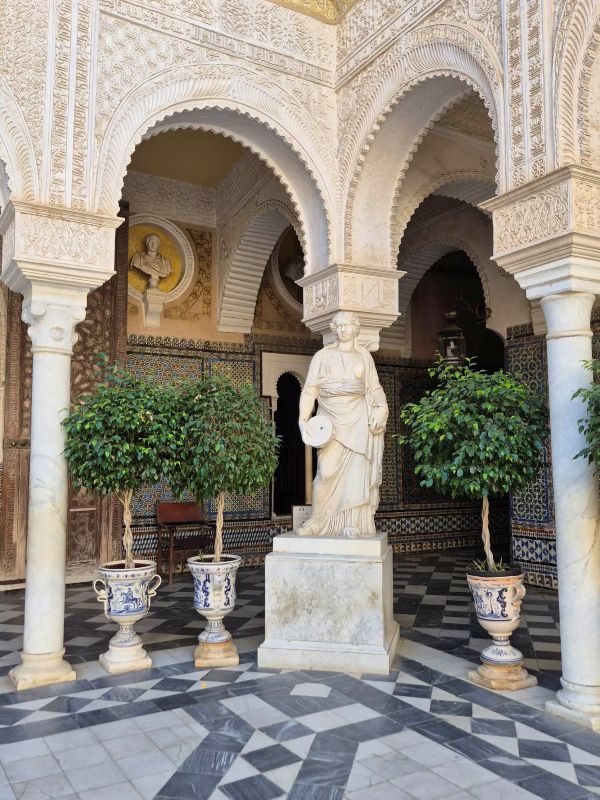
- Begin the visit in the palace’s impressive courtyard, where the audio guide introduces the history of the building and its noble owners.
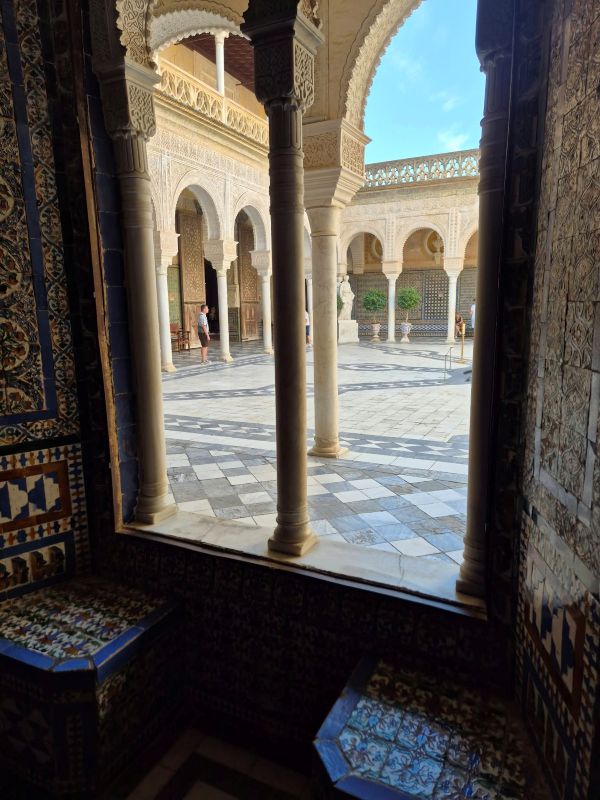
- Admire the combination of Mudéjar decoration, Renaissance marble columns, classical sculptures, and colorful ceramic tiles.
- Pay particular attention to the detailed azulejos, which are among the palace’s most distinctive features.
** Here’s a visit to the main entry and courtyard patio of the Case de Pilatos below
- Praetor’s Room
- Continue into this historic room, associated with the palace’s Roman-inspired decorative program.
- The audio guide explains the influence of classical antiquity on the Renaissance decoration of Casa de Pilatos.
- Look for the mixture of painted decoration, sculpture, and architectural details.
- Pacheco Room
- This room is associated with the artistic traditions of Seville and features decorative elements that reflect the palace’s changing artistic styles.
- The audio guide provides context about the works and the people connected with the room.
- Flagellation Chapel
- One of the oldest and most historically interesting spaces in the palace.
- Its architecture reflects the Gothic-Mudéjar character of the early palace.
- Examine the small chapel’s arches, columns, and decorative details while listening to the explanation of its religious and historical importance.
- Golden Room
- This richly decorated room demonstrates the transition between medieval and Renaissance artistic styles.
- Notice the ornamental details and the relationship between the room’s architecture and the rest of the palace.
- Seville Room
- The audio guide introduces the room’s connection with Seville’s aristocratic culture and the palace’s later history.
- Take time to appreciate the ceilings, tilework, doors, and furnishings.
- Pretorio Room and Adjacent Spaces
- These rooms contain additional examples of the palace’s mixture of Renaissance, Mudéjar, and classical influences.
- The audio guide helps explain how the rooms were used and how the palace evolved over several centuries.
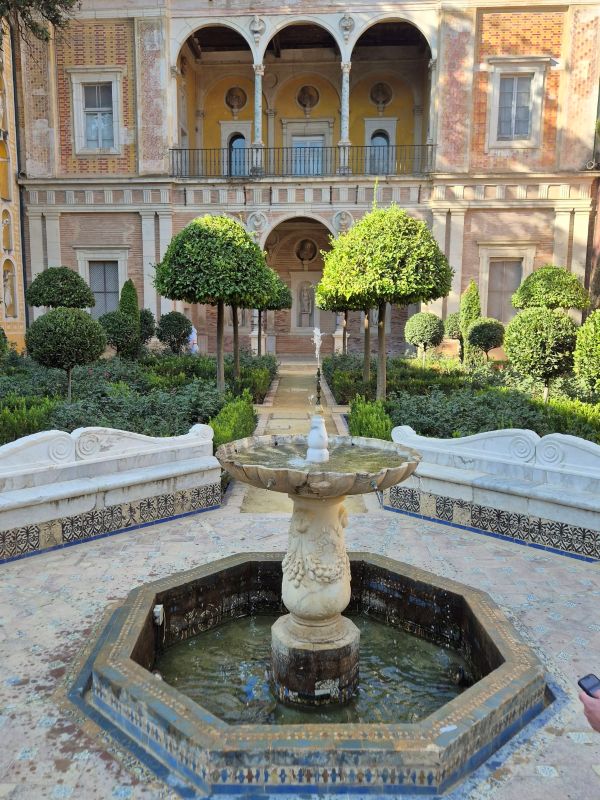
- Gardens and Lower-Level Outdoor Areas
- Finish the lower-floor route by exploring the gardens and courtyards.
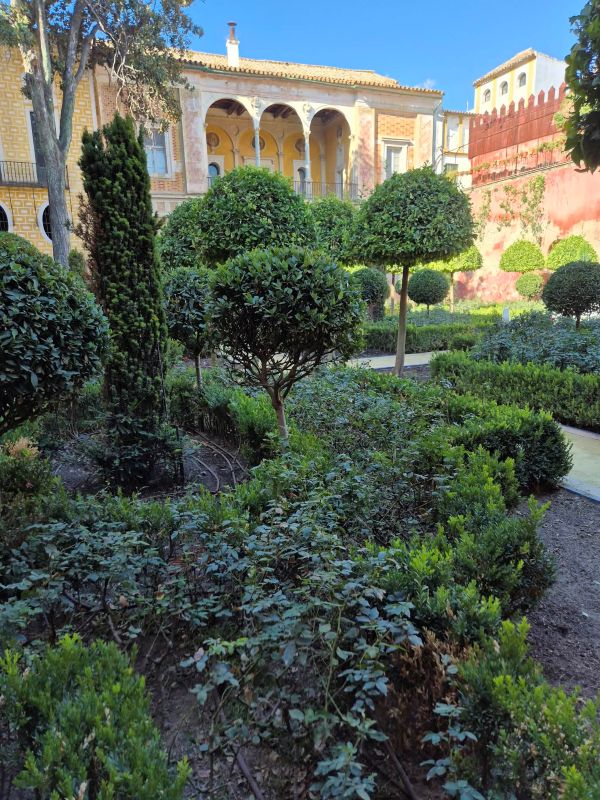
- Look for the combination of formal Renaissance elements with later landscaping.
- The quieter garden areas provide a good opportunity to appreciate Casa de Pilatos as a historic private residence rather than simply as a collection of individual rooms.
Tip: Follow the audio guide in its numbered sequence because it provides historical context for the rooms and explains how the different architectural styles came together. Allow roughly 60–90 minutes for the lower-floor visit if you want to listen to the explanations while also taking time to examine the decorative details.
Tips, Hours and Costs for Visiting Casa de Pilatos
When visiting Casa de Pilatos, allow about one hour to comfortably explore the palace, including its courtyards, richly decorated rooms, sculptures, and gardens. The palace is located at Plaza de Pilatos, 1, in Seville’s historic center, making it convenient to combine with nearby attractions such as the Seville Cathedral, Giralda, and Metropol Parasol. Casa de Pilatos The current listed opening hours are daily from 9:00 a.m. to 6:00 p.m. (Fundación Medina Celí)
Admission prices can vary depending on whether you visit the ground-floor palace alone or choose access that includes the upper floor. Check the official ticket information before visiting, as prices and access arrangements can change. It is worth arriving earlier in the day if you want a quieter experience and more time to appreciate the detailed Mudéjar tilework, marble courtyard, Renaissance decoration, and historic furnishings. Photography is generally useful for documenting the elaborate interiors, but follow any restrictions indicated inside the palace. The upper floor has been reopened to visitors after restoration work, although particular areas may occasionally be unavailable because of conservation work.
Personal Impressions to visiting
Considering that I booked this on the day of my visit, it was relatively easy compared to the other major attractions that were completely booked. What I experienced was just as impressive with the mixture of Mudejar, Renaissance and Christian influence with the interior designs and gardens. I was blown away to all the detailed ceramic, marble and fine finish materials that were expertly created to make this an exceptional home, even the gardens were meticulously designed with Renaissance flair and beautiful artwork and sculpture to fit perfectly with each room.
All of the elaborate details and then the focus on art, forms and design that blended so perfectly into this space. I can imagine what it must have been truly like to experience an invitation, meal or function during its heyday and what a special experience it must have been like to participate. Of course, now it’s easy enough to just buy a ticket and to have a fantastic experience in this beautiful home.
Check these Other places to visit in Seville Province
These are some other places worth visiting in Seville and surrounding areas that I am highlighting to visit below:
** Check out this video tour of the main garden with Gothic, Renaissance and Mudejar influences and blends so effortlessly below.
Conclusion to visiting Casa de Pilatos
Visiting Casa de Pilatos is a wonderful way to experience another side of Seville’s rich history beyond its most famous monuments. The palace brings together Mudéjar, Gothic, Renaissance, and later architectural influences, creating an extraordinary setting filled with colorful azulejos, marble work, sculptures, elegant courtyards, and historic rooms. Following the audio guide allows you to better understand the people, artistic traditions, and centuries of history behind the palace’s remarkable decoration.
If you are exploring Seville, make time to add Casa de Pilatos to your itinerary. Take your time walking through the courtyards, rooms, and gardens, and look closely at the details that make this historic residence so special. Add Casa de Pilatos to your Seville sightseeing plans and discover one of the city’s most fascinating historic palaces for yourself.
About Noel Morata with Visit Spain and Mediterranean.com
Having lived in Andalucia, I love exploring Spain on road trips, short to longer stays and really discovering the main sites, cool neighborhoods and unique and off the wall venues at each destination. I share tips to visiting, unique vistas and places to check out in each place I mention and why it’s a place of interest and worth checking out. The cuisine of each place I visit is always exceptional where I visit the local markets, specialty food purveyors and delicious and unique places to eat that showcase the foods of the area.
I love traveling through the different parts of Seville province and the city. Seville and visiting any of the amazing villas like Casa de Pilatos. Visiting really gives a complete impression of the life of a wealthy and noble Seville family and how Sevilla during its rise in power and influence really did shine in its influence and role of traditional life and culture in Andalucia.
Thanks for checking out Visit Spain and Mediterranean, please check out my other posts to visiting Cadiz and surrounding regions on the links above.