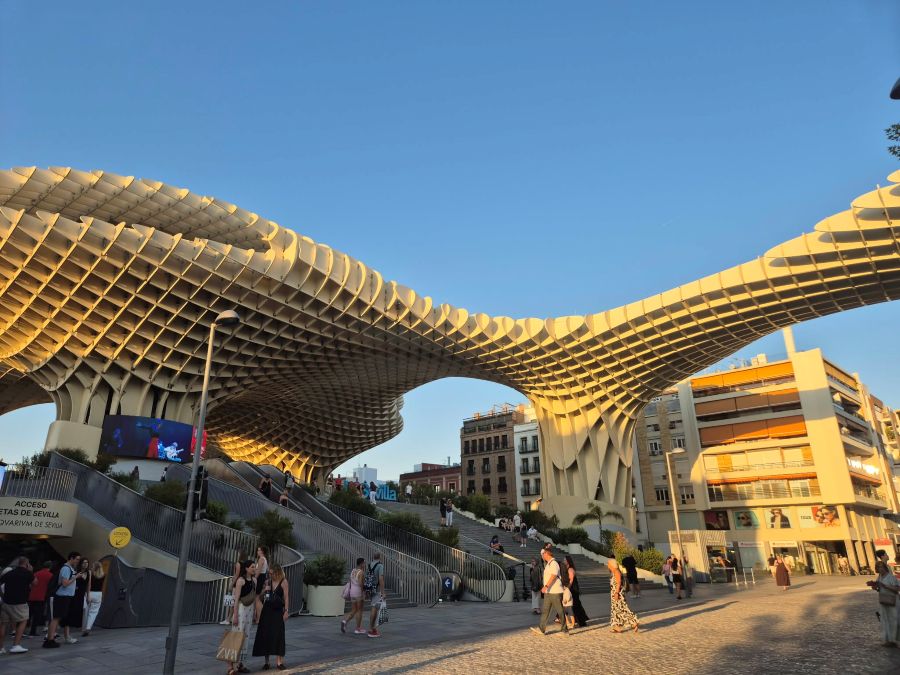
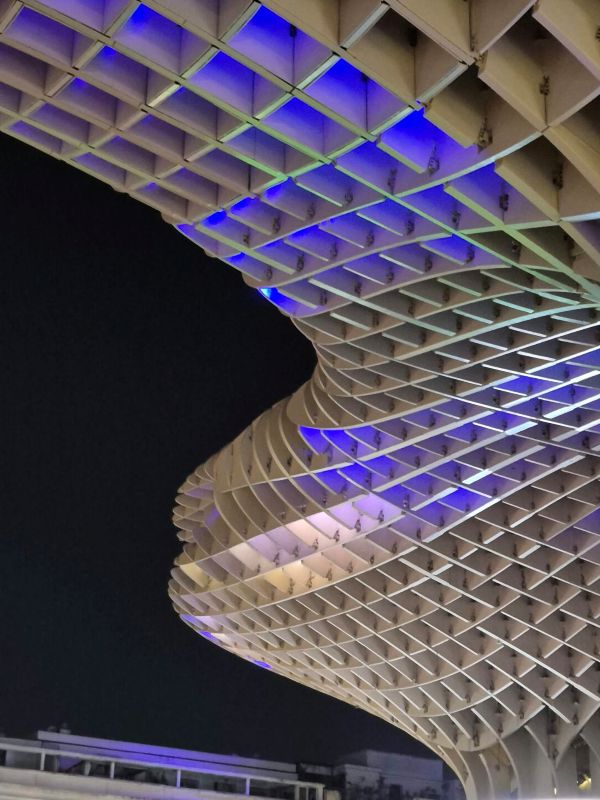
Nothing excites me more than visiting something truly unique and one of a kind in a city and Las Setas en Sevilla, Or Setas de Sevilla is truly that architectural wonder that excites locals and visitors alike. I love visiting this unique structure which is dubbed the largest wooden structure in the entire world and its organic and curving nature that resembles a mushroom cloud is also called the ” Metropole Parasol” to resemble undulating mushroom shapes and houses a traditional marketplace, various restaurants, a public performance space and an Archeological Antiquarium.
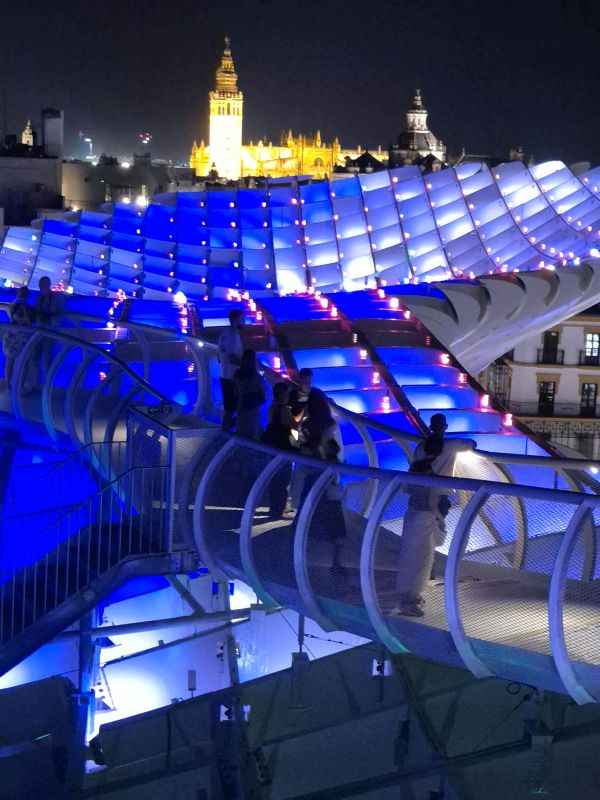
Located on the Plaza de la Encarnacion, in the heart of Seville, Las Setas Sevillas for me is exciting and sits on the crossroads of historic monuments and the trendier and more fun parts of the city. Although the site is fun to see during the daytime, I think nighttime is magical with all the colored light show, viewing the monuments from above and watching a myriad of free performances below.
Explore Las Setas en Sevilla, a wooden architectural wonder
A brief history of Setas de Sevilla
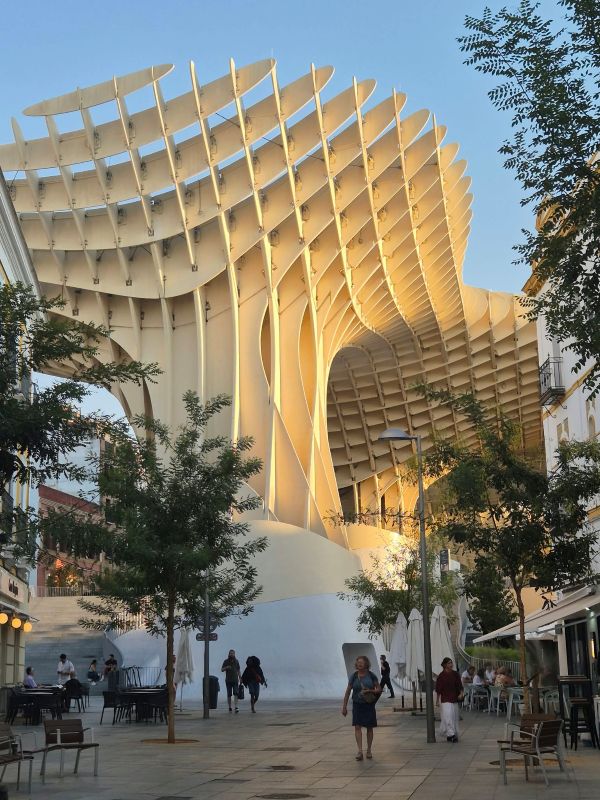
What was going to be a large underground parking lot, a discovery of Roman Antiquities where the museum now lies, converted the parking into a multi-use square and monument built in 2011 at a cost of 4.2 million Euros and has become one of the most beloved spots to hang out and explore with locals and tourists alike.
Setas de Sevilla, also known as the Metropol Parasol, is one of Seville’s most distinctive modern landmarks. Designed by German architect Jürgen Mayer, the structure was completed in 2011 as part of an urban redevelopment project in the historic Plaza de la Encarnación. Its enormous wooden canopy, supported by a concrete structure, was built above archaeological remains discovered during earlier construction work. Today, Setas de Sevilla combines the Antiquarium archaeological museum, a market, restaurants, and a rooftop walkway with panoramic views across the city. The project transformed a previously underused part of central Seville into a popular gathering place and became an important example of contemporary architecture within the city’s historic landscape.
How to Get to Setas de Sevilla
- By walking: Setas de Sevilla is centrally located at Plaza de la Encarnación, making it easy to reach on foot from Seville’s historic center.
- From Seville Cathedral: approximately 15–20 minutes.
- From Santa Cruz: approximately 15–20 minutes.
- From Plaza de España: approximately 25–30 minutes.
- By bus: Several TUSSAM city bus routes serve stops within walking distance of Plaza de la Encarnación. Check the current route and timetable before traveling.
- By tram: Take the MetroCentro tram to Plaza Nueva, then walk approximately 10–15 minutes to Setas de Sevilla.
- By metro: Take Metro Line 1 to Puerta de Jerez and continue on foot or connect with local transport toward the city center.
- By taxi: Taxis can drop passengers near Plaza de la Encarnación, although access to the immediate plaza may be restricted.
- By car: Driving into Seville’s historic center can be challenging because of narrow streets and traffic restrictions. It is generally easier to park outside the old town and walk to the Setas.
- By train: From Sevilla-Santa Justa railway station, Setas de Sevilla is roughly a 20–25-minute walk or a short taxi/bus ride.
- Useful landmark: Look for the enormous wooden mushroom-shaped structure in Plaza de la Encarnación—it is difficult to miss once you are near the square.
A traditional marketplace
The traditional market beneath Setas de Sevilla, known as the Mercado de la Encarnación, is a lively neighborhood market where locals and visitors can experience everyday Sevillian shopping. The market typically operates Monday through Saturday, generally from around 8:00 a.m. to 3:00 p.m., although individual vendors may have different hours. Visitors can browse stalls selling fresh fruit and vegetables, meat, fish, seafood, cheeses, cured meats, olives, spices, and other local products, making it a good place to discover ingredients and flavors associated with Andalusian cuisine.
Antiquarium of Seville
The Antiquarium of Seville is an important archaeological museum located beneath Setas de Sevilla in Plaza de la Encarnación. It preserves the remains of Roman, Visigothic, and later structures discovered during construction of the Metropol Parasol. Among its highlights are well-preserved Roman houses, mosaics, streets, and workshops that provide a fascinating glimpse into daily life in ancient Hispalis, the Roman name for Seville. The museum’s modern design incorporates the archaeological remains into an underground exhibition space, allowing visitors to explore layers of Seville’s history while standing beneath one of the city’s most contemporary landmarks.
Hang out spots and performance spaces
The areas under the Setas de Sevilla is surrounded by a myriad of cafes, bars and restaurants that cater to a wide variety of tastes from traditional Sevilla specialty foods and tapas to fantastic drinking venues. If you are looking for free evening entertainment, then the performance space right by the stairs, is a fantastic venue to enjoy the lights of the Setas and whatever is being featured by local performers mostly at night. Finding a bar or cafe or just sitting around and enjoying the space, people watching makes this a really special gathering place for both locals and visitors to Seville.
Following are places you can also explore close to this landmark in central Seville and an easy walk in the historic district.
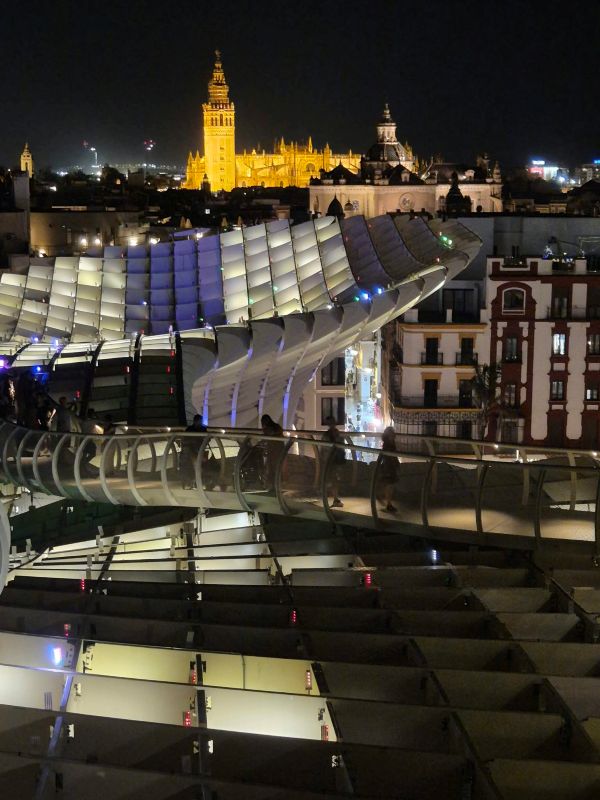
Historic Monuments to Visit Near Setas de Sevilla
- Iglesia del Salvador
- One of Seville’s most impressive Baroque churches, located a short walk from Setas.
- Admire its richly decorated interior, elaborate altarpieces, and historic architecture.
- The church stands on the site of earlier Islamic and Christian places of worship.
- Iglesia de San Luis de los Franceses
- A spectacular 18th-century Baroque church known for its ornate interior and dramatic architecture.
- Located in the historic district of San Luis, within walking distance of Setas.
- Palacio de las Dueñas
- A beautiful historic palace with courtyards, gardens, fountains, and a mixture of Gothic, Renaissance, and Moorish influences.
- Particularly interesting for its connection with Seville’s aristocratic history.
- Casa de Pilatos
- A magnificent 16th-century palace combining Renaissance, Gothic, and Mudéjar architectural elements.
- Its tiled courtyards, sculptures, gardens, and decorative ceilings make it one of Seville’s notable historic residences.
- Iglesia de Santa Catalina
- A striking example of Seville’s Gothic-Mudéjar architecture.
- Look for its distinctive tower and beautiful combination of Islamic-influenced and Christian architectural details.
- Palacio de la Condesa de Lebrija
- An elegant palace famous for its collection of Roman mosaics, archaeological pieces, ceramics, and richly decorated rooms.
- Particularly worthwhile for visitors interested in Seville’s Roman heritage.
- Iglesia de San Marcos
- Another excellent example of Mudéjar architecture in the historic center.
- Its simple exterior contrasts with the distinctive decorative details of its medieval design.
- Palacio de la Marquesa de Lebrija
- Located along Calle Cuna, this historic residence offers a fascinating combination of aristocratic interiors and archaeological treasures.
- Its Roman mosaics are among its most memorable features.
- Historic Santa Cruz and the Cathedral area
- A longer walk from Setas but ideal for continuing a historic sightseeing route.
- Explore Seville Cathedral, the Giralda, and the surrounding narrow streets and plazas to experience some of the city’s most famous monuments.
Here’s a video tour of Las Setas at sunset to night
Check out these other posts to visiting Seville and surrounding area
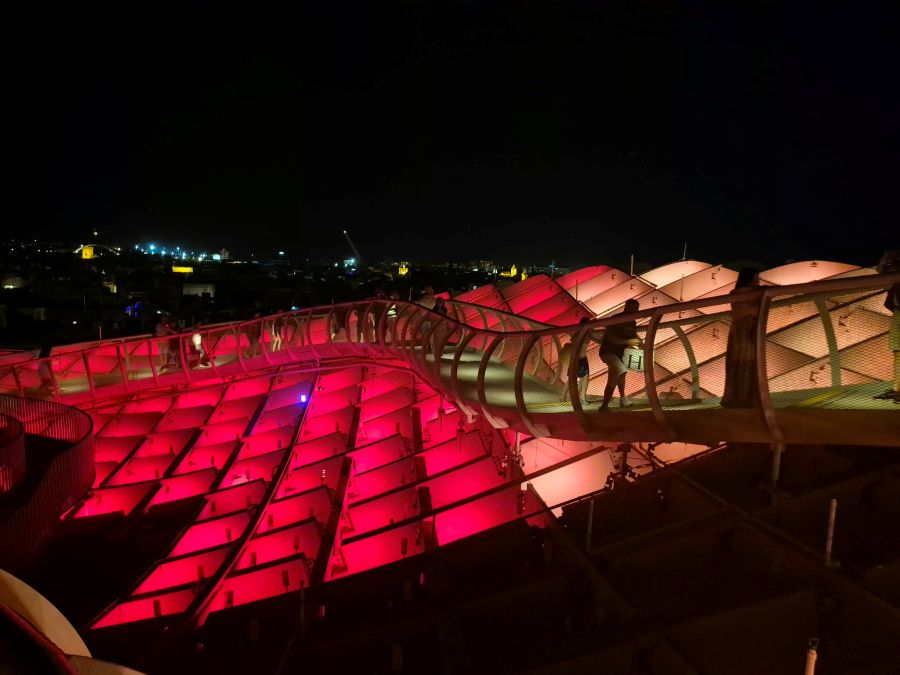
Conclusion to visiting Las Setas Sevillas
Visiting Las Setas de Sevilla is a wonderful way to experience the contrast between Seville’s ancient heritage and its modern architectural identity. From the archaeological treasures of the Antiquarium and the lively market below to the spectacular rooftop views across the historic city, the Setas offers something different from Seville’s traditional monuments. Whether you visit during the day to explore the surrounding historic streets or arrive in the evening to watch the city glow beneath the sunset, it is an experience worth adding to your Seville itinerary especially during sunset to night. Make Las Setas de Sevilla part of your next visit, climb to the rooftop, take in the panoramic views, and discover this remarkable landmark for yourself!
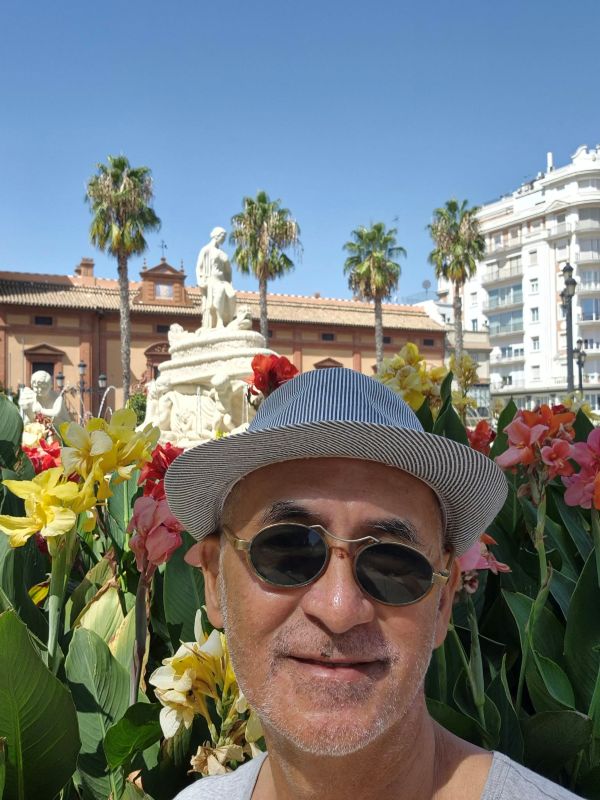
About Noel Morata with Visit Spain and Mediterranean.com
Having lived in Andalucia, I love traveling through the different parts of the province of Seville. Las Setas Sevillas is one of those modern landmarks that just draw you in with its unique mushroom shape and unusual organic form, and it’s all made of wood. It’s located above on of my favorite squares and hang out spots, filled with exciting energy during the day or nighttime, it’s an exciting place to visit. Thanks for checking out Visit Spain and Mediterranean, please check out my other posts to visiting Cadiz and surrounding regions on the links above.
3 thoughts on “Las Setas en Sevilla”